
What is a biomimetic crown? A tooth-preserving option
If a tooth has a large filling, a crack, or has been weakened over the years, your dentist may recommend protecting it with a crown. What many people do not realise is that there is now a more conservative way to do this — one that keeps far more of your natural tooth intact. At Grange Road Dental we call it a biomimetic crown, or "bio-crown" for short.
The word biomimetic simply means "designed to copy nature". In dentistry, that means restoring a tooth in a way that closely resembles how it looked, felt and functioned before it was ever damaged or filled.
What is a biomimetic crown?
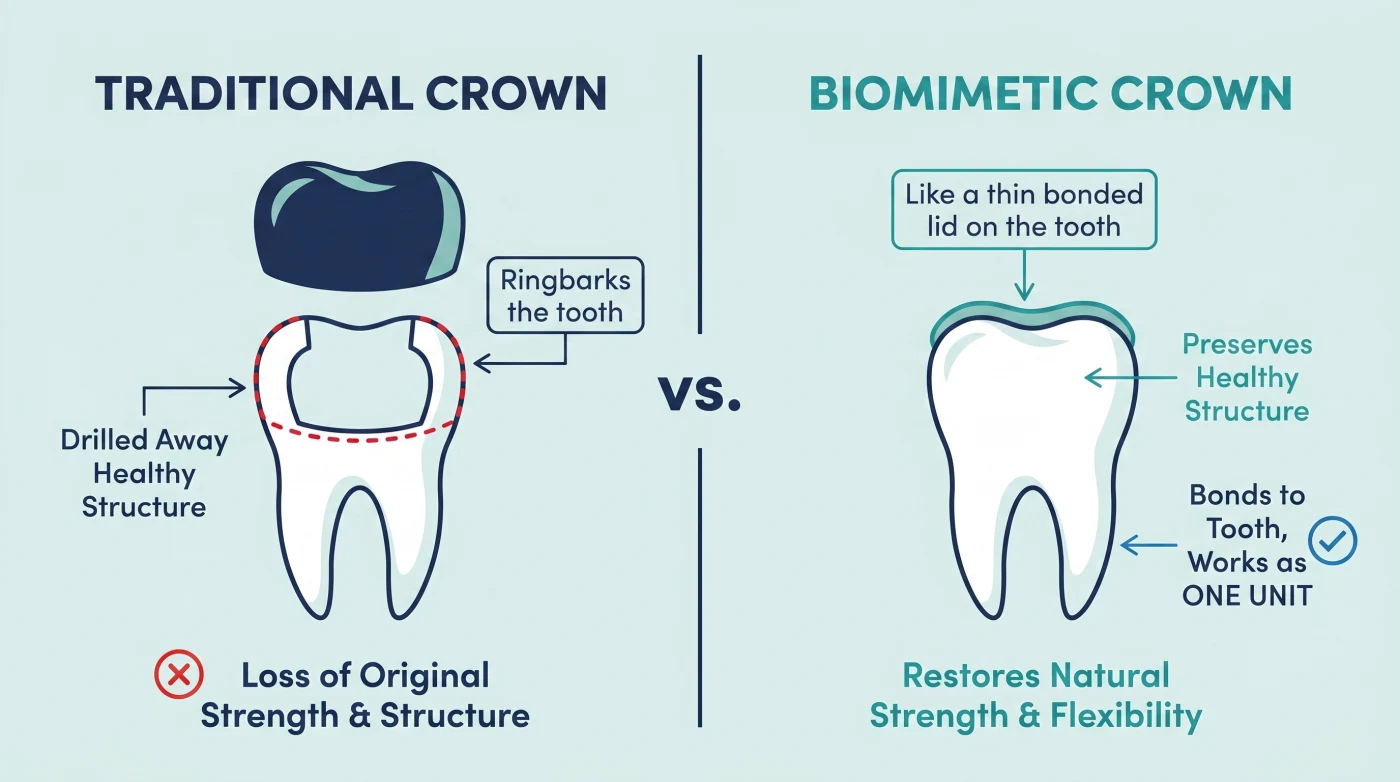
A biomimetic crown is a modern type of dental crown designed to mimic the natural strength, flexibility and behaviour of a real tooth. Unlike traditional crowns, which often require a large amount of healthy tooth to be drilled away, a biomimetic crown focuses on preserving as much of your natural tooth structure as possible.
This matters because keeping more of your own tooth helps it stay stronger and healthier over the long term. In many cases, a biomimetic crown can return a tooth's strength and integrity to a level similar to before it ever needed a filling in the first place.
How is it different from a traditional crown?
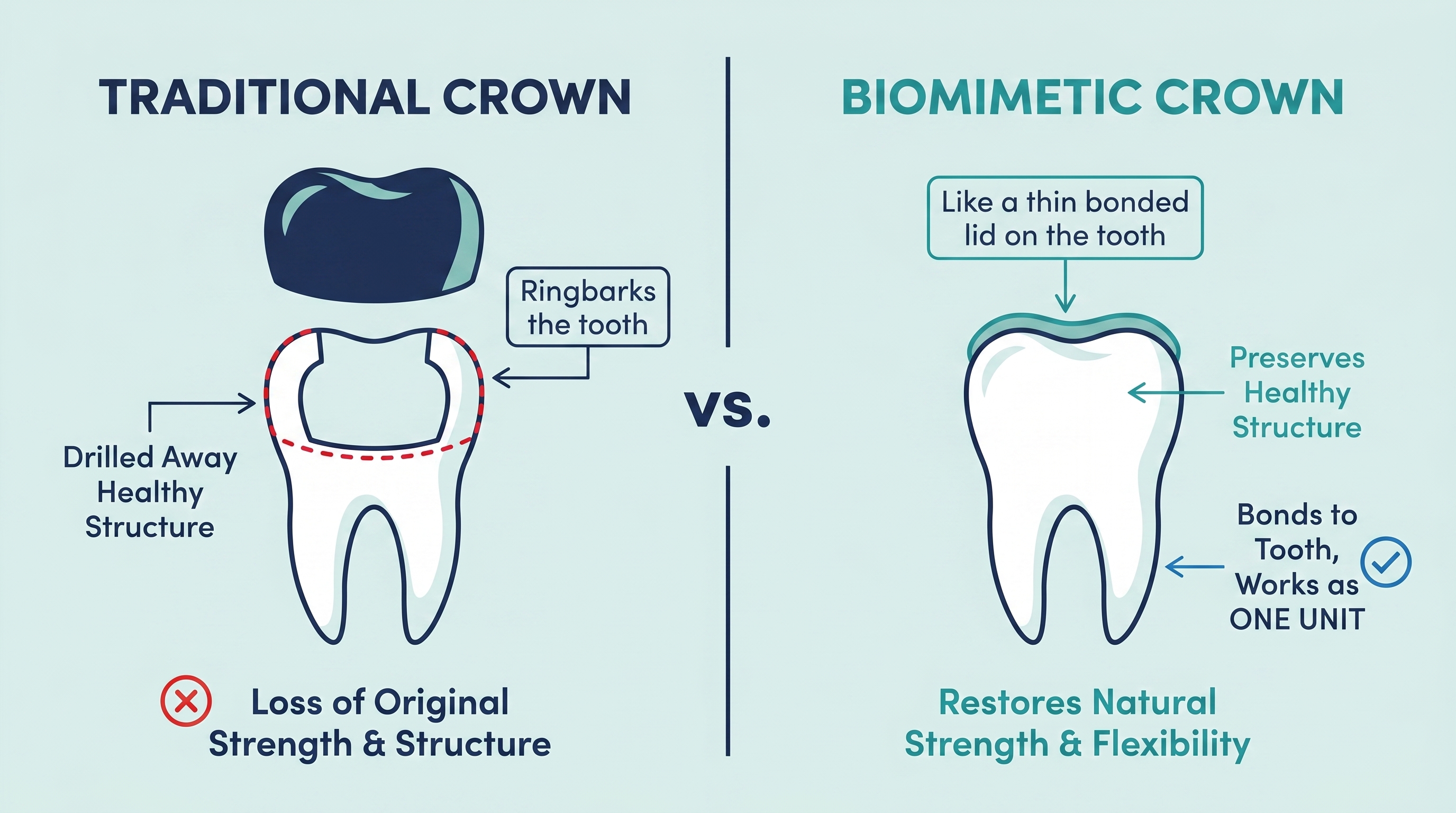
Traditional crowns are usually held in place by their shape and by cement. To make room for the cap, the tooth has to be significantly reduced — and removing that healthy structure can weaken the tooth over time.
A biomimetic crown takes a different approach. It uses advanced bonding techniques and tooth-like materials so that the crown and your remaining natural tooth are bonded together to work as a single unit. Instead of replacing the tooth, it reinforces it. This reduces stress on the tooth and lowers the risk of cracks, fractures and future complications.
The benefits of a biomimetic crown
For the right tooth, a biomimetic approach offers several advantages:
- Preserves healthy tooth structure — only the damaged or weakened part of the tooth is treated, minimising unnecessary drilling.
- Less pain and sensitivity — because the tooth is restored in a more natural way, there is often less temperature sensitivity and discomfort afterwards.
- May help avoid more invasive treatment — by strengthening and protecting what remains, a conservative approach can sometimes reduce the need for procedures such as root canal treatment.
- Well suited to cracked, worn or heavily filled teeth — especially teeth that have been weakened gradually over time.
- Lower risk of future decay — the strong bonded seal helps protect the tooth and reduces the chance of decay forming around the restoration.
- Biocompatible, natural-looking materials — chosen to closely match your natural teeth in strength, flexibility and appearance.
It is also worth knowing that a crown is not always the first step. In some situations a BioClear filling can provide enough structural support to strengthen a cracked or heavily filled tooth without needing a full crown at all, as our real case of repairing a cracked tooth behind an old filling shows. We will always talk you through the most conservative option that suits your tooth.
Here is the take-home guide we give patients after this kind of visit, ready to print or save:

Is a biomimetic crown right for you?
Biomimetic crowns are often a good fit when a tooth is damaged, cracked or heavily filled but still has enough healthy structure left to be preserved. They are not the right answer for every tooth, though — and that is the point. Your dentist will carefully assess the tooth, your bite and your overall oral health to decide whether this approach is the best option for you.
If you are looking for a strong, long-lasting restoration that looks, feels and functions like a natural tooth, a biomimetic crown may be an excellent choice. Both of our dentists, principal dentist Dr Andrew Zischke and Dr James Yang, have completed training in biomimetic dentistry and offer biomimetic crowns and BioClear restorations, so they are happy to talk through whether it suits your situation.
Talk to us
The best way to find out if a biomimetic crown is right for your tooth is to have it assessed. Call us on (07) 3281 6666 or book an appointment online, and we can examine the tooth, check your bite, and recommend the most conservative, long-lasting way to restore it.
Been told you need a conventional crown and want a second look first? Ask for a second opinion appointment and we will talk you through every option, from least to most invasive.
Recent articles

Why do crowns fail, and how long do they last?
24 Sept 2026